 RU
RU ME
ME DE
DE
How to Buy Property in Montenegro: A Guide for Foreigners Who Want to Invest Wisely in 2025
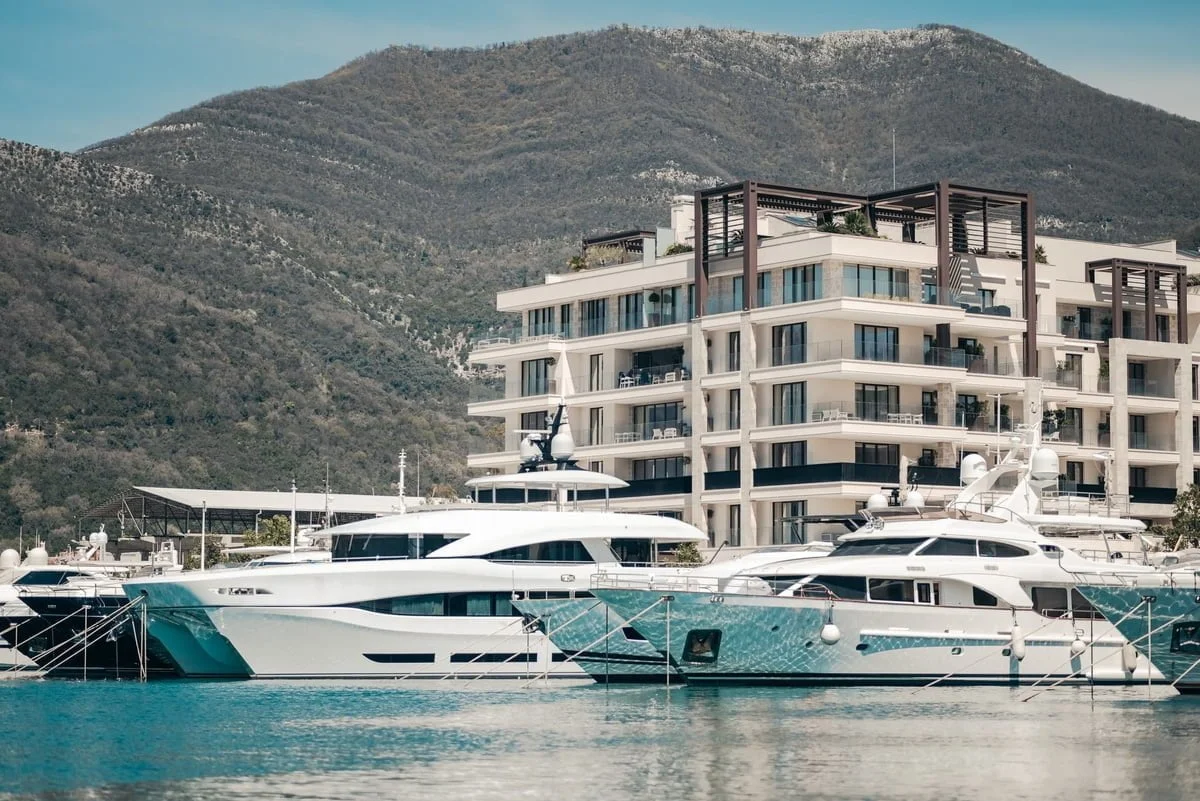
Montenegro: The Most Promising Real Estate Investment Destination on the Adriatic
Montenegro has become one of the most attractive real estate markets on the Adriatic Sea. It offers a steadily growing property sector, proven resilience, some of the lowest taxes in Europe, investor-friendly residency rules, accessible property prices, diverse natural landscapes, and excellent environmental conditions.
This guide brings together everything you need to know before making a purchase: Montenegro’s investment potential, property rights for foreigners, the most sought-after property types, average prices, financing options, the full purchase procedure, and all related costs.
The guide is prepared with the support of Orascom Development Holding, an international developer specializing in integrated resort destinations worldwide.
Why Invest in Montenegrin Real Estate
A Growing Market
Anyone comparing property options along the Adriatic will quickly notice that Montenegro remains significantly more affordable than Italy or Croatia. This price gap creates substantial potential for further growth—meaning higher returns for investors entering the market today.
A striking example: according to official statistics, from 2023 to 2024 the average price of new seaside properties in Montenegro increased by 25.9%. Such rapid appreciation is nearly impossible in mature markets—but in Montenegro’s still-expanding environment, strong upward swings continue to occur.
Importantly, this growth is not a recent phenomenon. Montenegro has been developing for almost two decades—ever since becoming independent in 2006. During this time, the country has transformed from chaotic, small-scale construction into a destination known for world-class integrated resorts such as Lustica Bay, one of the most impressive developments on the entire Adriatic.
Accessible Residency
Montenegro offers one of Europe’s most attractive residency policies: any property purchase, regardless of value, makes the buyer eligible for a temporary residence permit.
This means your new home can become a base for future relocation—whether for retirement or a change of lifestyle. Until then, you can use the property for holidays and rental income.
Residency is also easy to obtain through other routes, such as starting a local business or registering as a digital nomad.
Low Taxes
Montenegro has some of the lowest property-related taxes in Europe—an advantage for both investors and those buying homes for personal use.
For comparison:
Spain: 8–10% purchase tax
Italy: 9–10%, and up to 22% for luxury properties
Montenegro:
Secondary market: 3–6% tax (based on cadastral value) + fixed fees
New developments: 0% purchase tax — buyers pay nothing beyond the property price
VAT (21%) is already included in the price of new-builds and paid by the developer. This approach dramatically reduces buyer expenses and helps maintain high investment returns.
Nature and Quality of Life
Montenegro is an exceptionally comfortable, healthy place to live. The country has clean air, no polluting industries, and astonishingly diverse landscapes: dramatic mountains, serene bays, sandy and pebble beaches, lakes, ancient forests, vineyards, islands, and canyons—all within short driving distances.
Travel connections are excellent, with modern highways, several coastal airports, and even ferry links to Italy.
Yachting is extremely popular here—many expats buy their own boat thanks to Montenegro’s marinas, sailing schools, and lower maintenance costs compared to Western Europe.
Can Foreigners Buy Property in Montenegro?
Yes. Foreigners can freely purchase apartments and houses in any region of Montenegro. Residency is not required, and property can be registered in full private ownership.
The only limitation concerns land:
A foreign buyer may purchase up to 5,000 m² of land if there is a building on it.
Unbuilt land is allowed only if it is included in a detailed urban plan.
Foreigners actively take advantage of these rules. In the last four years, international buyers have invested €1.5 billion into Montenegrin real estate. Many coastal properties are already owned by citizens of Russia, Serbia, Turkey, Switzerland, the US, and many other countries.
Lustica Bay alone has homeowners from more than 40 nations.
Property Types Foreigners Prefer
Seaside Real Estate
Budva, Kotor, and Tivat are the main magnets for foreign demand. Modern business- and premium-class seaside apartments remain the strongest investment option, offering:
The highest capital appreciation
The most stable rental income
Premium infrastructure and services
Here you’ll find everything from boutique low-rise residences to large integrated resorts such as Lustica Bay.
Mountain Properties
Kolasin and Zabljak are Montenegro’s rapidly developing ski destinations. Prices are lower than on the coast; for the cost of a small seaside apartment, you can often buy a chalet or villa in the mountains.
Interest from foreign buyers is steadily growing.
Capital City Properties
Apartments in Podgorica remain a reliable investment class, driven primarily by local demand. Foreigners usually buy them for long-term rental income, which is stable, though not as high as coastal short-term rentals.
Property Prices in Montenegro & Financing Options
Despite ongoing growth, Montenegrin real estate remains affordable.
Below are official average prices:
Average Price per m²
Location 2023 2024 Change
Coast €1,584 €1,995 +25.95%
Mountains €1,288 €1,316 +2.17%
Capital €1,700 €1,824 +7.3%
These figures refer to typical economy and comfort-class residential buildings. Premium properties—seafront locations, high-end finishing, resort infrastructure, professional management—can cost 3–4 times more per square meter.
How to Save on Costs
Buying early-stage construction is a common strategy. As the project progresses, prices grow significantly.
For example, in 2012, when Lustica Bay began development, Marina Village properties sold for around €2,800/m². Prices have since increased by 3.5×.
Another strong advantage is interest-free payment plans offered by most developers. Some extend installment schedules beyond the construction period.
At Lustica Bay, for instance, buyers can secure a property with 20% down payment and pay the rest over several years. Owners who join the rental program can use rental income to cover a substantial part of their remaining balance.
Five Steps to Buying Property in Montenegro
Buying can be done remotely—no personal visit required.
Every transaction follows five key stages:
1. Due Diligence
A legal check confirms ownership and identifies any encumbrances. A technical inspection assesses the condition of the property.
For new-builds, it’s important to examine the developer’s track record.
Real estate agents or independent lawyers typically assist with this.
2. Signing the Contracts
Two agreements are usually involved:
Preliminary Agreement (Predugovor)
Secures the property for the buyer
Requires a deposit (10–20%)
Removes the property from the market
Main Agreement (Glavni Ugovor)
Signed before a notary
The notary verifies documents and certifies signatures
A court-appointed interpreter is required if the buyer doesn’t speak Serbian
3. Payment
Payments are made according to the contract:
Secondary market: usually 100% upfront
New-builds: payment plans often available
Transfers are typically made via bank-to-bank international payment.
4. Taxes
Secondary Market
Up to €150,000 → 3%
€150,000–500,000 → €4,500 + 5%
Over €500,000 → €22,000 + 6%
The tax must be paid within 14 days of registering ownership.
Primary Market
No purchase tax.
VAT (21%) is already included in the price and paid by the developer.
Companies purchasing property may apply for VAT refund—lawyers can assist with the process.
5. Registration of Ownership
The notary submits the contract to the cadastre, and the buyer receives the official ownership certificate (“List Nepokretnosti”).
Registration usually takes 2–4 weeks.
Additional Costs
Large developers often cover all administrative fees: notary, translator, legal support, and even agent commissions.
Lustica Bay follows this model, significantly reducing buyer expenses.
Expense Secondary Market New Developments
Transfer Tax 3–6% + fixed fees (€4,500 or €22,000) 0%
Lawyer 0.5–1% 0%
Agent 2–5% 0%
Notary €300–600 + VAT €0
Translator From €50/h €0
Conclusion
Montenegro offers a simple, safe, and transparent purchase process, low taxes at every stage, and the possibility of securing residency—and potentially citizenship in the future. Whether you’re seeking investment, a holiday home, or a relocation option, Montenegrin real estate offers exceptional value and long-term potential.
For personalized consultations—such as payment options for buyers from specific countries—or detailed investment yield calculations, contact the specialists at Orascom Development Holding.
* Sources of information
Official statistics on new-build property prices in Montenegro
Data on the volume of foreign investments in Montenegrin real estate


 Jadranski Put 28, 85310, Budva, Montenegro