 RU
RU ME
ME DE
DE
NON-LEGALIZED REAL ESTATE IN MONTENEGRO
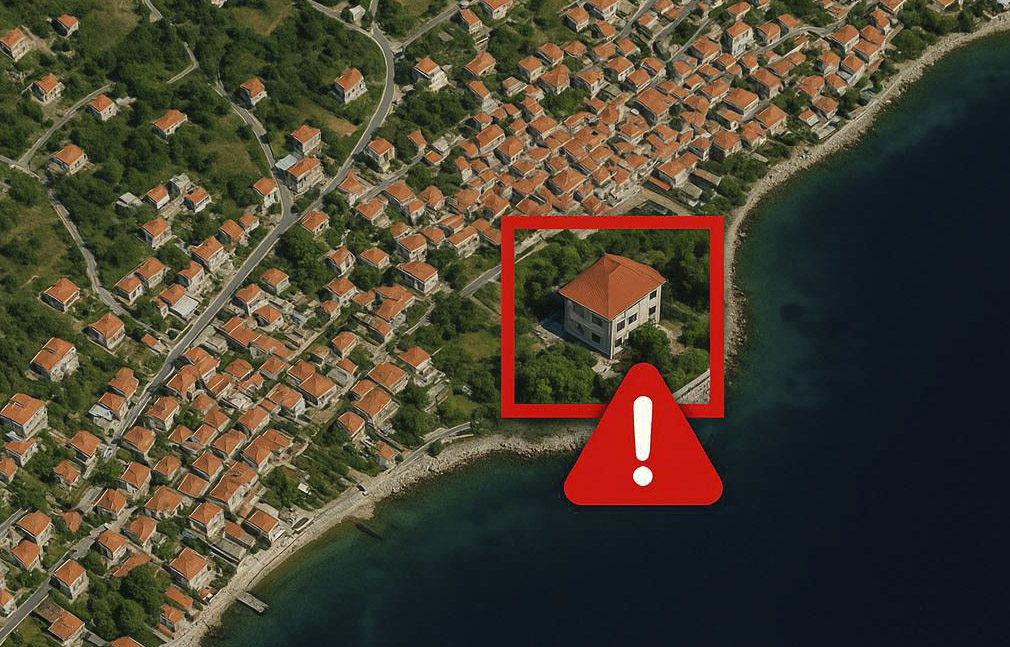
‼️ UNLEGALIZED PROPERTY ‼️
Montenegro has a law on the legalization of illegally constructed real estate objects (unregistered houses, extensions, villas, garages, commercial premises, etc.).
• The law established a final deadline for submitting legalization applications.
• This deadline is final and will not be extended — until February 14, 2026.
• After this date, it will be impossible to submit an application, even if the object is visible on satellite images and physically exists.
This means that if the owner does not submit the documents by the specified date, the property will be considered an illegal construction, regardless of its actual existence.
Why is it so strict?
Montenegro is completing a large-scale reform of the cadastre and land registry, also in the context of aligning with EU standards.
The goal is to bring order to the real estate sector, where historically there have been many:
• unauthorized constructions,
• unregistered alterations,
• buildings without construction permits.
What happens if the property is not legalized?
✔️ Ban on sale. The property cannot be sold or gifted since it will not exist in the registry.
✔️ Inheritance issues. Processing inheritance will be difficult or impossible.
✔️ Fines. Authorities can impose administrative penalties for illegal construction.
✔️ Possible demolition. If the object is deemed unsafe or a significant violation, it may be forcibly demolished.
Who must submit an application?
• Owners of objects built without a permit, with deviations from the approved project, or with illegal extensions.
• This applies to both residents and foreign owners (for example, Russians, Ukrainians, Serbs, etc.) who own property in Montenegro.
What documents are usually required?
The standard package (may vary by municipality):
Land or property documents (title deed, purchase agreement, etc.).
Current technical (geodetic) plan of the object.
Technical inspection of the building (sometimes a structural assessment).
Receipt confirming payment of the state fee.
Important: the process takes time, as it requires work from engineers and architects.
☝Conclusion
If a property in Montenegro is not fully legally registered, the legalization process should be started now, not in 2026, because:
• technical specialists will be overloaded closer to the deadline,
• service prices may increase,
• after the deadline, legalization will be impossible.


 Jadranski Put 28, 85310, Budva, Montenegro